

AudioSpaces #17
January, February and March 2026. Plus: mountain sounds and vertical listening.

Hello from the most irregular sound newsletter on Substack. Who needs the algorithm, anyway?
It’s three months into the year and things are all getting a bit scary around the world. All the more reason, we believe, to continue with a regular habit of pausing and listening – wherever you are, for least a few minutes.
We’re lucky to be part of a global community of people who think the same way. A bunch of you have even chosen our tools to help you do this, and to share your sonic worlds with the rest of us.
In this newsletter we showcase what our contributors have been offering up in recent weeks and months, alongside some reflections relevant to the project. This compilation is always, above all else, in the interest of recognition and to express our gratitude.
But for those of you not (yet) on AudioSpaces, the themes we explore here might still provide some inspiration. Let’s start with our favourite contributions from the first quarter of 2026.
AudioSpace(s) of the month(s)
In January we heard the year start with chatter, rumbles and crashing waves.
Many of you were still travelling: by foot, in the air or underground.
Going to weddings, on canal boats, practicing the guitar.
February required stretching the ears to all corners.
Choral singing in outer Budapest, hissing city buses in Buenos Aires.
Limington pigs squelch and complain, a family speaks over each other in Tripoli.
One of the eeriest city soundscapes we’ve heard so far was found in Warsaw.
Many of the sounds from March revealed collective sonic experiences across the world.
Protests, jungle raves, village bells, broadcasts about something called “Liquid Content”.
At the other extreme, there are also lots of private moments of quiet.
Sleepy lakeside afternoons, walks home and multiple chompings on crunchy food.
Where are we all recording?
We’re getting to a point now where we have a range of AS scenes in several different places around the world.
In some cases I literally could not tell you how they’ve emerged. In others, we’re aware of certain friends who have helped nourish these fascinating sections of the map. Here’s an example of each of these.
Wandering around Leeds…
… you’ll find it hard to miss the sounds left frozen in time by the likes of concon, lauren, pg_field-records, owolf, aghill, thomaschacharealsmooth, freddie, fern mawg, eugeni and joe.
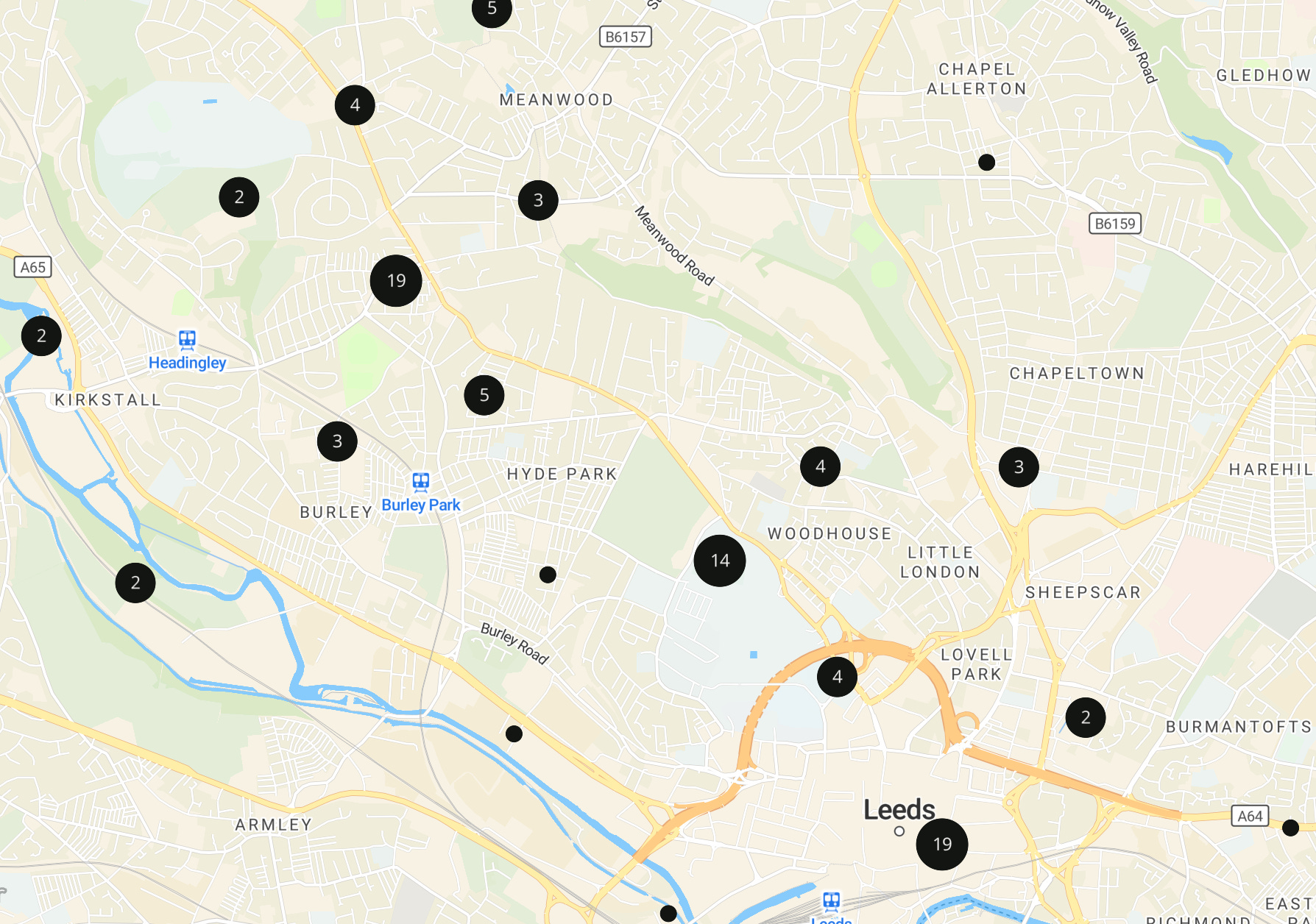
Some of the recordings here are very interesting, both sonically and textually. To be honest though, the main thing I get from listening to all the Leeds recordings is a kind of warm, fuzzy sense that you all just really love your mates. Isn’t that sweet!
If you’re ever in the greater Doha metropolitan area…
… you’ll soon be blessed with a very recent sprawl of auditory urbanists. It’s been a real pleasure catching a whisper of the acoustic profile of a city so far from anywhere I’ve ever visited, which is being so thoughtfully documented by our local contributors.
It’s also obviously an interesting moment to be given this window into everyday life in the city, during a time of great regional uncertainty. A big welcome to AudioSpaces goes to maryam alhajri, hissa alobaidan, donya johari, sh, amna alnaimi, aseel, moza, marcus, amy, fayqa, maha al-yafei and leila.
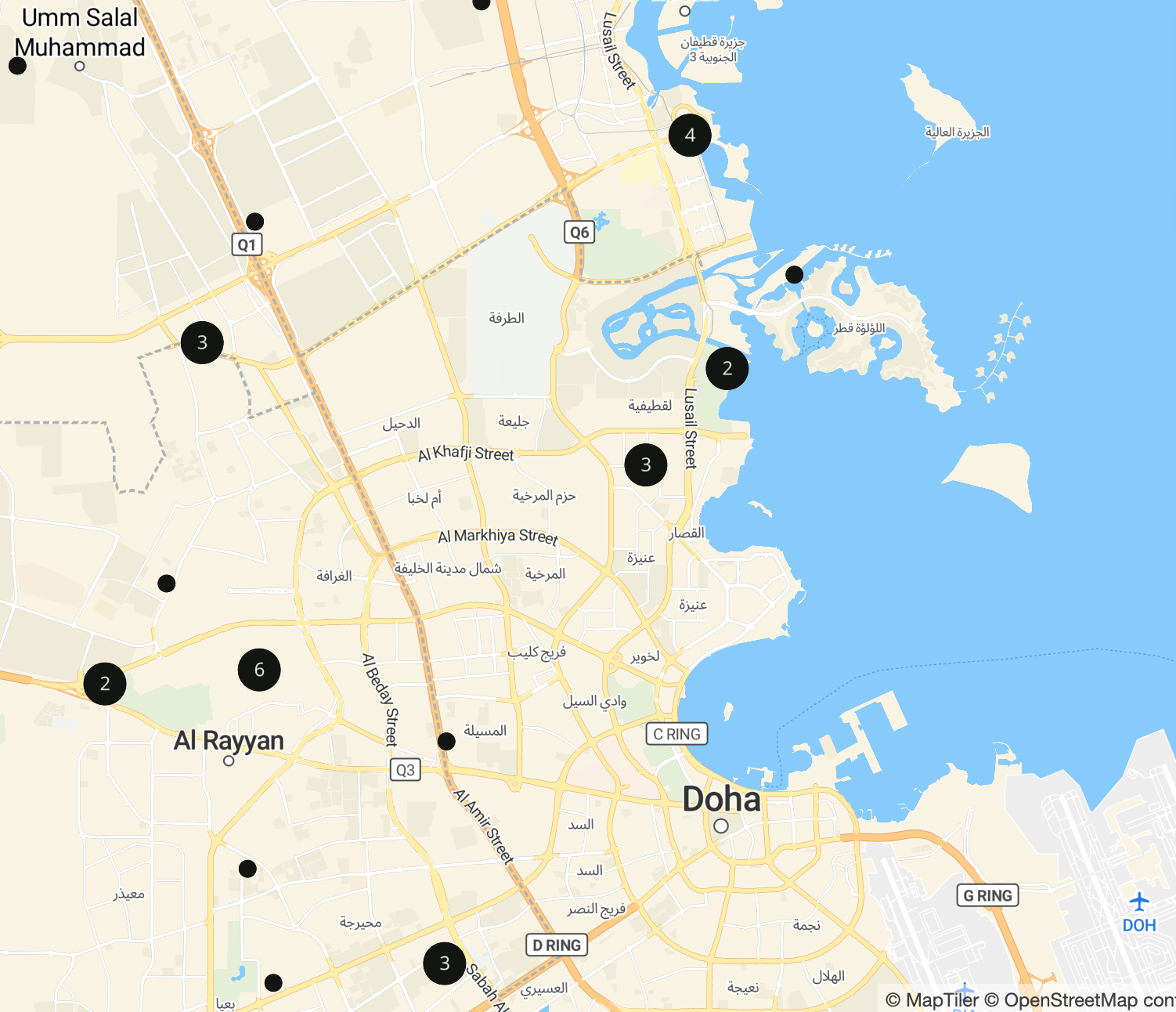
Anyone from Leeds or Doha is very much invited to get in touch with us. We’d love to help you build a full-scale sonic homage to your city!
By the way, did you see we made ourself our own website?
As well as the host of the AudioSpaces web version, this will be where we archive all our ongoing projects, activities and experiments. Probably worth saving somewhere…
A different format
Now, over the past couple of years I’ve used these newsletters to sneak in some of my own interests. These were always a bit scattershot, curiosities about sound and space under headings like “other stuff” or “things to explore”.
Hopefully that felt useful or relevant or interesting to some of you, but maybe it’s time to switch things up a bit.
From now on, we’ll peel out themes directly from the AudioSpaces map. From there, I’ll offer up some interesting directions and rabbit holes – like in the tiny essay I include below – to inspire more listening along similar lines.
Hopefully this will have a kind of looping effect: the more a theme is nourished with outside inspiration, the more it’ll grow on the map.
Mountain sounds and vertical listening
In February we were treated to a special recording from sebastian sw – always a friend and important part of the project. “We are here, on top of Mexico”, he proclaims, still nonetheless pretty nonchalant as he stands at 5,363 metres above sea level, atop the Pico de Orizaba (or Citlaltépetl) in Veracruz.
This isn’t the first contribution we’ve had from a mountain top. Back in 2024, simon ferrier-may shared a recording from Everest’s South Base Camp at 5,364 metres. Along with some Tibetan chanting and “good chicken” in Kathmandu, this was an amazing entry to listen to – taken soon before he embarked on his long climb to the summit. Big hugs, Titch!
Beyond the second-hand (undeserved) triumphant feeling I get as those cold mountain winds pass distorted through my headphones, Seb and Simon’s recordings from such heights had some unexplained effect on me. A kind of otherworldliness, maybe.
This set me off on a scattered trail of thought, which has distracted me all month, as I’ve walked around thinking of ways to get an actual job. What is it that makes a mountain recording sound so special?
Of all the soundscapes that form in the mind when we think about the so-called “natural environment”, mountains are surely one of those most associated with peace and quiet. Imagined as more sparsely populated than the lowlands, mountains have so often been assigned connotations of the sacred and the meditational, or even in secular terms the extreme limits of humankind’s reach.
The idea that higher altitudes might attract people like Gordon Hempton, the acoustic ecologist looking for his one square inch of silence in Washington’s Olympic National Park, is of course not really a question of finding complete silence. The feeling of reflection that might come with listening from a peak seems to have little to do with an actual absence of sound, but rather a perceived absence of human sounds.
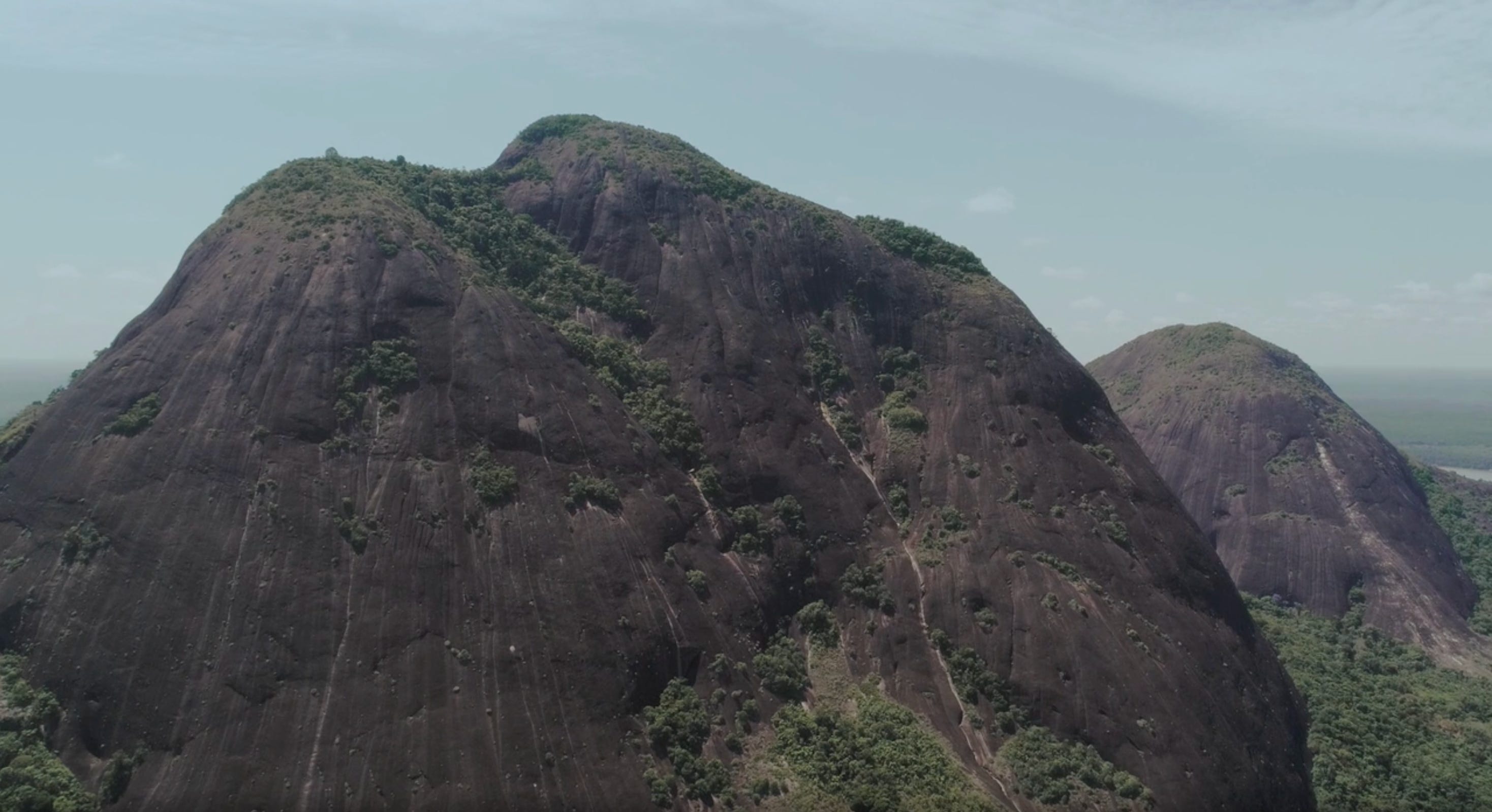
Some great writers here on Substack have pointed out that mountains themselves are noisemakers – from the ecosystems that live on their surface, right down to their literal geophysical rumbles. Just as much, cultures around the world have historically been well aware of the sonority of mountains, which in many worldviews are given agency and understood to listen and speak themselves.
No – clearly the relationship between altitude and sound has never been simply one of higher = quieter. Even if we’re talking about just human sounds, the idea of absence is questionable. Humans and mountains have always been in relation with one another: people have always inhabited them, and mountains themselves have often made their way into human soundworlds.
Altitude does, though, affect how we hear. This is materially true: when you’re high up enough that air density significantly changes, then things at the very least get thinner and quieter. Rather than go home and rewrite my CV, I listen to Simon and Seb’s short recordings again and try to place myself on the mountainside with them: things do begin to sound different, then, as you climb to the top.
But heights also transform our listening in a cultural sense – in the ideas that altitude brings, and the ideas we collectively form about vertical height itself. Mountains, the ultimate expression of altitude, are of course never really separate from their existence as objects of culture, or from how we come to know them.
Steven Feld’s idea of “acoustemology” (acoustics + epistemology, or knowledge) speaks exactly to this point: there is a curious symbiosis between physical heights, sound and the way knowledge about the world takes shape. In other words, sound's relationship to spatial direction is inextricably tied to our cultural understandings of the world itself.
Feld arrived at the idea of acoustemology at some point during his 25 years working with Kaluli people in the mountainous Bosavi rainforest, in Papua New Guinea. Feld found that crucial to the reproduction of the Kaluli people’s world was how people would listen and make sounds with their local environment, and in turn the environment would listen and makes sounds back.
This constant call-and-response between people and space is key to how the Bosavi rainforest is known by its own inhabitants, thoroughly vertical as much as it is anything else: echoes up and down from the canopy to the forest floor, filtering through layers of vegetation, animal and other voices piling one on top of the other, ordering and disordering time and space.
The Kaluli reflect this in their own music, characterised by a layered, sedimentary groove dulugu ganalan or what Feld calls “lift-up-over sounding”.
If you asked me to reflect my own concept of altitude reflected in music, I don’t think I’d be able to play you anything other than Biosphere’s 1997 masterpiece Substrata. It channels exactly that otherworldly coldness of mountains, thinly stretched, suspended, echoing and refracting through valleys between collossal snowy rocks, inert and geophysical but somehow also animate, emotionally-charged. Seb and Simon’s recordings stir something similar in me.
Even as I carry on walking around my neighbourhood – now listening to misty ambient music, though still contemplating a life of permanent underemployment – I feel that this layered, vertical sound business is all starting to piece together. The strangeness I was experiencing when listening to mountain recordings on the map now maybe starts to make more sense.
Just as in the Bosavi rainforest, the relationship between height and sound plays a fundamental role in my understanding of the world. My listening is vertical and layered: above, below, across, under, over...
But until now, I had been unconsciously imagining my auditory experience of the environment in planar terms. I feel a bit late to the game with this realisation. Artists like Katharina Bayer and Gustavo Guzmán have already drawn attention to this verticality of the sonic world.
All this is to say, then, that Seb and Simon unintentionally highlight a real limitation to the AS map as we know it. We still follow the familiar sound map format, or just general map format: flat. But acoustemology is never simply a flat affair.
Listening is as vertical as it is horizontal; we measure sound in volume, we hear the environment in stratified layers. This reality of the auditory world seems never more apparent than when we’re brought into contact with those extreme physical heights.
So, if like our lovely contributors you ever go climbing to your nearest peak, make sure you bring something to capture what you hear. That act of recording might reveal something about the place and your relationship to it – and, as a result, it might reveal something about how you listen.
Anyway. I still haven’t found a job, but thanks for reading. We’ve been up to a bunch of nice things with the project, which we’re on the cusp of being ready to share with you all. So stay tuned for next time.
Hopefully we’ll have a nice tidy April edition in thirty days. Or maybe this thing will turn into a quarterly update? A return to longer-form writing beyond these newsletters should also be coming soon, but who really knows when?!